Detailed comparison between ceramic and porcelain tiles covering technical specifications, durability, cost, applications, and buying guidance.
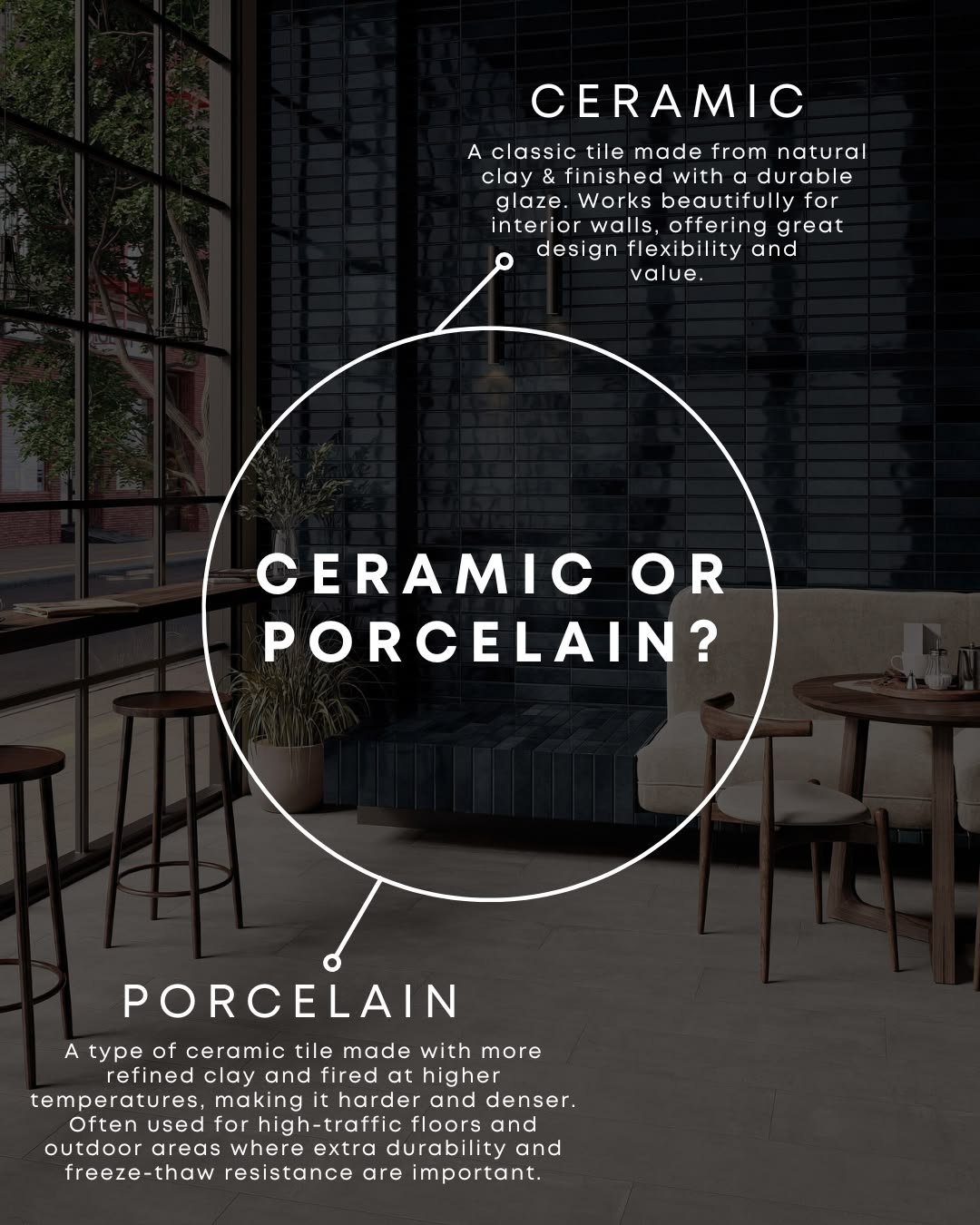
When selecting tiles for your project, understanding the differences between ceramic and porcelain tiles is essential. While both are made from clay-based materials, they differ significantly in composition, durability, and application suitability.
Composition Differences:
Ceramic tiles are made from clay mixed with other materials and fired at temperatures between 1100-1150°C. Porcelain tiles, however, use refined clay with additional materials and are fired at higher temperatures exceeding 1200°C, resulting in a denser product.
Durability Comparison:
Porcelain tiles are denser and more durable than ceramic tiles, making them more resistant to scratching, staining, and wear. Ceramic tiles, while still durable, are more prone to chipping and cracking, especially in high-traffic areas.
Water Absorption:
Porcelain tiles have a water absorption rate below 0.5%, while ceramic tiles can absorb up to 3% of water. This makes porcelain tiles superior for wet areas like bathrooms and kitchens.
Cost Analysis:
Ceramic tiles are generally less expensive than porcelain tiles, both in material cost and installation. However, the longer lifespan of porcelain tiles may justify the higher initial investment.
Applications and Best Uses:
Ceramic tiles are suitable for dry interior spaces with moderate foot traffic. Porcelain tiles are ideal for high-traffic areas, wet environments, and commercial applications.
Buying Guide:
Consider your project requirements, budget, and aesthetic preferences when choosing between ceramic and porcelain tiles. For durability and longevity, porcelain is the superior choice despite higher costs.
Back to Home